Introduction
Blockchain is often associated with cryptocurrencies, yet its potential extends far beyond digital assets. At its core, blockchain is a distributed ledger technology (DLT) that records transactions across multiple computers in a way that is transparent, tamper-resistant, and verifiable.
As industries search for secure, efficient, and trustless systems, blockchain has emerged as a practical tool for solving real-world problems. From supply chains to healthcare records, organizations are experimenting with decentralized solutions that reduce fraud, streamline operations, and enhance accountability.
Understanding Blockchain Technology
Before exploring applications, it’s important to understand what makes blockchain distinct.
Key characteristics include:
- Decentralization: No single authority controls the ledger.
- Immutability: Once recorded, data cannot easily be altered.
- Transparency: Transactions can be audited.
- Security: Cryptographic mechanisms protect data integrity.
These features make blockchain suitable for industries that rely on trust, verification, and traceability.
Supply Chain Management
One of the most promising blockchain use cases is supply chain tracking.
Global supply chains involve multiple intermediaries, increasing the risk of fraud, counterfeiting, and inefficiencies. Blockchain enables companies to:
- Track products from origin to destination
- Verify authenticity of goods
- Improve recall processes
- Reduce paperwork and reconciliation delays
For example, food producers can trace contamination sources quickly, while luxury brands can authenticate products to prevent counterfeits.
Blockchain enhances transparency without requiring each participant to fully trust one another.
Healthcare and Medical Records
Healthcare systems often struggle with fragmented data across providers. Blockchain offers a framework for secure and interoperable medical records.
Potential benefits include:
- Secure sharing of patient data between institutions
- Reduced administrative overhead
- Improved data accuracy
- Enhanced patient control over personal information
Instead of relying on siloed databases, healthcare providers can access verified information through permissioned blockchain networks.
Privacy remains critical, so many healthcare implementations use private or consortium blockchains rather than public networks.
Financial Services Beyond Cryptocurrency
While cryptocurrencies are blockchain’s most visible application, traditional financial institutions are adopting the underlying technology.
Applications include:
- Cross-border payment settlement
- Trade finance automation
- Clearing and settlement efficiency
- Digital identity verification
Blockchain can reduce settlement times from days to minutes by eliminating intermediaries and automating reconciliation.
Financial institutions often use private blockchains to maintain regulatory compliance while benefiting from distributed ledger advantages.
Smart Contracts in Business
Smart contracts are self-executing agreements coded directly onto a blockchain. When predefined conditions are met, actions occur automatically.
Business applications include:
- Automated insurance payouts
- Escrow services
- Real estate transactions
- Royalty distribution for digital content
By reducing manual intervention, smart contracts lower operational costs and minimize disputes.
However, coding accuracy is essential, as errors in smart contracts can create vulnerabilities.
Government and Public Sector Use
Governments are exploring blockchain to improve transparency and efficiency.
Use cases include:
- Digital identity systems
- Land registry management
- Secure voting systems
- Public record authentication
In land registries, blockchain can reduce fraud and property disputes by maintaining tamper-resistant ownership records.
In voting systems, blockchain may enhance auditability, though scalability and privacy challenges must be addressed before widespread implementation.
Energy and Sustainability
Blockchain is being applied in the energy sector to enable peer-to-peer energy trading.
Applications include:
- Tracking renewable energy credits
- Decentralized energy marketplaces
- Monitoring carbon offsets
Consumers with solar panels, for example, can sell excess electricity directly to neighbors using blockchain-based systems.
Additionally, blockchain can provide transparent carbon accounting, helping companies meet sustainability goals.
Intellectual Property and Digital Ownership
Creators face ongoing challenges related to content ownership and compensation.
Blockchain can help by:
- Recording intellectual property rights
- Automating royalty payments
- Verifying authenticity of digital assets
- Protecting against unauthorized duplication
By embedding ownership data into immutable ledgers, blockchain enhances accountability in digital ecosystems.
Challenges to Widespread Adoption
Despite its potential, blockchain faces several obstacles:
- Scalability limitations
- High implementation costs
- Regulatory uncertainty
- Integration with legacy systems
- Energy consumption concerns in certain networks
Not every business problem requires blockchain. In some cases, traditional databases are more efficient.
Organizations must evaluate whether decentralization genuinely adds value before implementation.
The Future of Blockchain Applications
Blockchain adoption is gradually expanding as enterprises refine use cases and improve scalability.
Future developments may include:
- Greater interoperability between networks
- Hybrid public-private blockchain models
- Improved regulatory frameworks
- Integration with artificial intelligence and IoT systems
The technology is evolving from experimental pilot projects to targeted enterprise solutions.
Blockchain’s success beyond cryptocurrency depends on delivering measurable efficiency, transparency, and security improvements.
Frequently Asked Questions (FAQ)
1. Is blockchain only useful for cryptocurrencies?
No. Blockchain can be applied to supply chains, healthcare, finance, government systems, and more.
2. What is the difference between public and private blockchains?
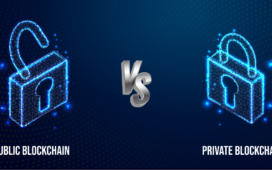
Public blockchains are open and decentralized, while private blockchains restrict access to authorized participants.
3. Are blockchain systems completely secure?
They are highly secure due to cryptographic design, but vulnerabilities can exist in smart contracts or external integrations.
4. Can small businesses benefit from blockchain?
Yes, especially in areas like supply chain transparency, digital identity, and contract automation, though cost considerations are important.
5. Does blockchain eliminate the need for intermediaries?
In some cases, it reduces reliance on intermediaries, but regulatory and operational requirements may still require oversight.
6. How does blockchain improve transparency?
It creates an immutable ledger that allows authorized participants to verify transactions in real time.
7. Will blockchain replace traditional databases?
Not entirely. Blockchain is best suited for scenarios requiring decentralization and trust minimization, while traditional databases remain efficient for many centralized applications.